
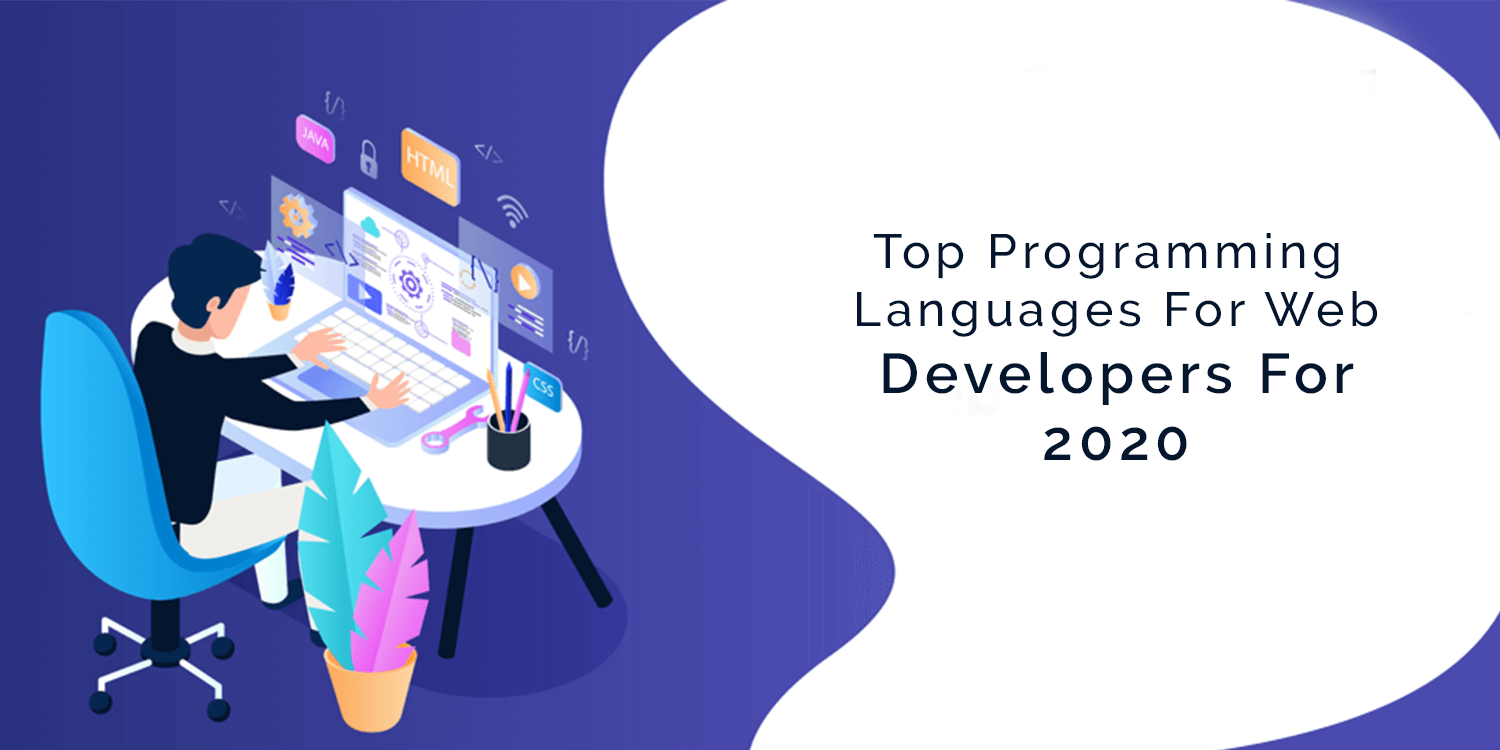
There is no single “best” programming language for every web developer. The right choice depends on the kind of application you want to build, the existing technology stack, performance requirements, hiring market, and how quickly you need to deliver.
This guide focuses on practical choices rather than popularity rankings. Some languages are primarily used on the backend, while JavaScript and related technologies also power browser applications. Others are valuable when web development overlaps with data, mobile, systems, or enterprise software.
Programming languages worth learning for web development
1. JavaScript
JavaScript remains a core web-development language because it runs directly in browsers and is also widely used on servers through runtimes such as Node.js. Developers can build interactive front ends, APIs, real-time applications, and full-stack products with one language.
Best for: browser applications, full-stack development, interactive interfaces, APIs, and real-time features.
2. TypeScript
TypeScript extends JavaScript with static typing and tooling that can make large codebases easier to understand and maintain. It is especially useful for teams working on complex applications where clear contracts between components matter.
Best for: large front-end applications, full-stack teams, shared codebases, and maintainable JavaScript projects.
3. Python
Python is known for readable syntax and a broad ecosystem. Frameworks such as Django and Flask make it suitable for web applications and APIs, while the same language is heavily used in automation, analytics, data science, and AI.
Best for: APIs, web applications, automation, data-heavy products, and AI-enabled systems.
4. PHP
PHP remains important across the web, particularly in content management systems and established application stacks. Its mature hosting ecosystem and frameworks make it practical for teams maintaining or building PHP-based products.
Best for: WordPress and other CMS platforms, content-driven sites, ecommerce, and PHP application stacks.
5. Java
Java is a mature, strongly typed language with a large enterprise ecosystem. Frameworks such as Spring are widely used for APIs, business applications, and services where maintainability, integration, and long-term support are important.
Best for: enterprise applications, APIs, high-volume services, and teams already invested in the Java ecosystem.
6. C#
C# is closely associated with the .NET ecosystem and is used for web APIs, enterprise applications, cloud services, desktop software, and game development. ASP.NET Core provides a modern framework for building web applications and services.
Best for: Microsoft-centric organizations, enterprise applications, APIs, and cloud services.
7. Ruby
Ruby is valued for developer productivity and readable code. Ruby on Rails provides conventions and integrated tooling that can help teams build database-backed web applications quickly, although the ecosystem is smaller than those of JavaScript, Python, Java, or PHP.
Best for: teams with an existing Ruby stack, startups using Rails, and convention-driven web applications.
8. Go
Go is designed for simplicity, fast compilation, concurrency, and efficient deployment. It is a strong option for backend services, APIs, networking software, and cloud infrastructure.
Best for: backend services, APIs, cloud tooling, networking, and performance-conscious systems.
9. Rust
Rust emphasizes memory safety and predictable performance without relying on a traditional garbage collector. It is more demanding to learn than many web-focused languages, but it can be valuable for performance-sensitive services and systems components.
Best for: performance-sensitive backend services, infrastructure, WebAssembly, and systems-oriented development.
10. Swift
Swift is primarily associated with Apple-platform development rather than general web development. It can still be relevant when a developer works across a product’s web services and native Apple applications.
Best for: Apple applications and teams that need to bridge native development with backend services.
Which language should you learn first?
- New to web development: Start with HTML and CSS, then learn JavaScript. Add TypeScript after you are comfortable with JavaScript fundamentals.
- Interested in backend development: Python, Java, C#, Go, PHP, or JavaScript can all be sensible choices. Choose based on the ecosystem you want to work in.
- Interested in WordPress: Learn PHP, JavaScript, HTML, CSS, and the WordPress development model.
- Interested in AI and data: Python is usually the most practical first choice.
- Targeting enterprise software: Java and C# are strong options, especially where those ecosystems are already established.
Language matters less than the surrounding skills
A professional web developer also needs version control, testing, debugging, APIs, databases, authentication, deployment, security, accessibility, performance, and basic cloud concepts. Framework knowledge changes quickly; strong programming fundamentals transfer between languages.
Before choosing a language, look at the jobs or projects you actually want to pursue. The best learning investment is the language that lets you build relevant projects and develop skills that transfer to the type of work you want.
Keep learning: Python vs Java: Which Programming Language Is Best? and JavaScript Frameworks to Learn.
