
Python is used across web applications, APIs, automation, data products, and AI systems. The right framework depends less on a popularity ranking and more on the workload, architecture, team skills, operational requirements, and amount of framework functionality you want to own.
Leading Python Framework Choices
Django
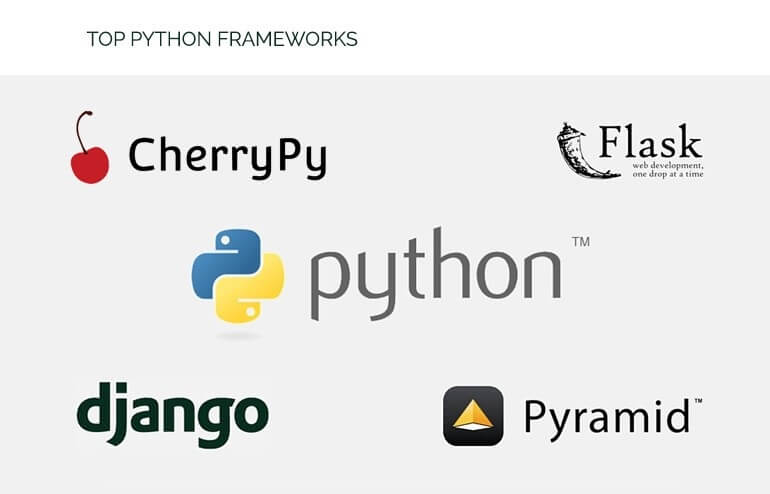
Django is a mature, full-stack web framework with conventions and built-in components for common application needs. It is a strong fit for teams building feature-rich business applications that benefit from an integrated approach to models, routing, authentication, administration, forms, security, and templates.
FastAPI
FastAPI is a modern framework for building Python APIs using type hints. It is well suited to API-first services and integrations where automatic OpenAPI documentation, validation, and asynchronous capabilities are useful. Its ecosystem also builds on components such as Starlette and Pydantic.
Flask
Flask is a lightweight web framework that gives developers more freedom over application structure and dependencies. It can fit smaller services, prototypes, APIs, and teams that prefer to assemble the components they need rather than adopt a larger integrated framework.
Other Frameworks to Consider
Python also has specialized frameworks for particular workloads, including asynchronous services, data applications, scientific computing, and other web architectures. A framework should enter the shortlist because it fits a requirement, not because it appears on a generic “top” list.
Python Frameworks Compared
| Framework | Best fit | Main strength | Watch for |
|---|---|---|---|
| Django | Full web applications | Integrated features and strong conventions | More framework structure than a minimal service may need |
| FastAPI | APIs and service integrations | Type-driven API development and automatic documentation | You may need to select more surrounding components |
| Flask | Small services and flexible architectures | Minimal core and architectural freedom | More decisions and components are left to the team |
How to Choose
- Choose Django when you need a comprehensive web platform, conventions, and many common application capabilities.
- Choose FastAPI when API development is central and type hints, validation, and generated API documentation are important.
- Choose Flask when you want a lightweight foundation and maximum control over application structure.
- Consider another option when your workload has specialized requirements that one of these frameworks does not address well.
Questions to Ask Before Choosing
- Is the application primarily a server-rendered web product, an API, or a set of services?
- How much built-in functionality does the team want?
- What Python version and dependency policies will the project follow?
- How will authentication, authorization, testing, observability, and security be implemented?
- How will the application be deployed, scaled, upgraded, and supported?
- Does the team have experience with the framework?
- Is the framework’s ecosystem mature enough for the application’s expected lifespan?
What Matters Beyond the Framework
Framework choice is only one part of application quality. Database design, API contracts, authentication, authorization, testing, observability, dependency management, deployment, security, and maintainability can have a larger impact on long-term success.
Common Mistakes
- Choosing a framework solely because it is popular
- Comparing frameworks by benchmark numbers without matching the workload
- Ignoring the team’s ability to maintain the stack
- Adding dependencies without considering upgrade and security ownership
- Assuming a framework’s defaults eliminate the need for application-level security and testing
Final Takeaway
The best Python framework is the one that fits the workload and the team that will operate it for years. Start with application requirements, compare the trade-offs, and choose the smallest level of framework complexity that still gives the project the capabilities and operational confidence it needs.
